
I.P.O. Model for Effective Teams
A powerful way to asses your team

I’m a workshop facilitator. I help teams become the best versions of themselves, because I firmly believe that everyone deserves to work with an excellent team. This means I nerd out about team dynamics. I just finished reading Richard Hackman’s book “Leading teams: Setting The Stage For Great Performances.” Here is my key take-away:
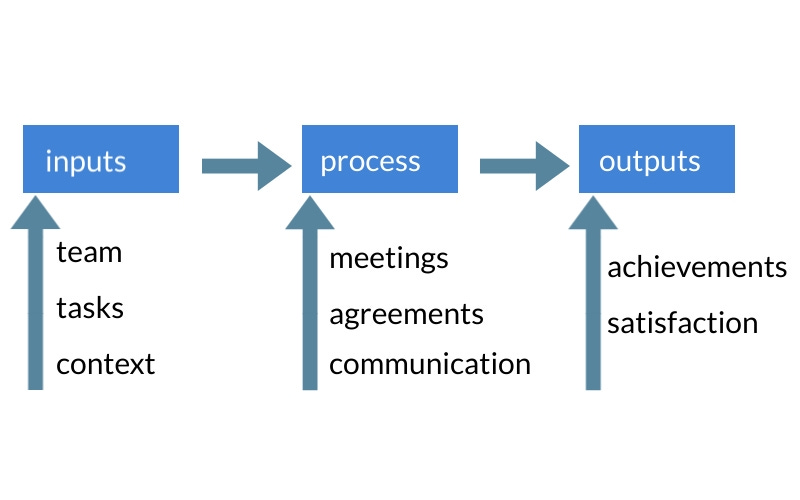
Richard Hackman uses an Input-Process-Output (IPO) model as a framework to understand high-performance teams. This model originates from the field of organizational psychology and team dynamics. Hackman, a prominent scholar in this field, introduced this model to understand and analyze the factors influencing team effectiveness. The model is designed to explore the inputs that affect teams, the processes within the team, and the resulting outputs or outcomes.
Key Components of the IPO Model:
1. Inputs:
- Refers to the characteristics and conditions that exist before a team is formed. This includes factors like team composition, task design, organizational context, and resources available to the team.
2. Processes:
- Encompasses the interactions and activities that occur within the team. It involves how team members communicate, make decisions, handle conflicts, and coordinate their efforts to achieve the team's goals.
3. Outputs:
- Represents the results and outcomes of the team's efforts. This includes both the tangible outcomes (e.g., completed projects, achieved goals) and intangible outcomes (e.g., team cohesion, member satisfaction).
Hackman's model emphasizes the interdependence of these three components, highlighting that effective teams are not only influenced by the skills and abilities of individual team members but also by how the team is designed and how members interact with each other.
Understanding and optimizing the inputs, processes, and outputs can contribute to the overall effectiveness and success of a team. Leaders can use this model as a framework for assessing and improving team dynamics.
As a facilitator, it is the process part that I really get to sink my teeth into, and what I feel really makes or breaks a team. In other words, a leader can put together an excellent team, made up of individuals with amazing and complimentary skills, but if the process - the actions, reactions, and dynamics in the moment - are flawed, the team will never get the outputs they desire.